Bahrain's AI Ecosystem
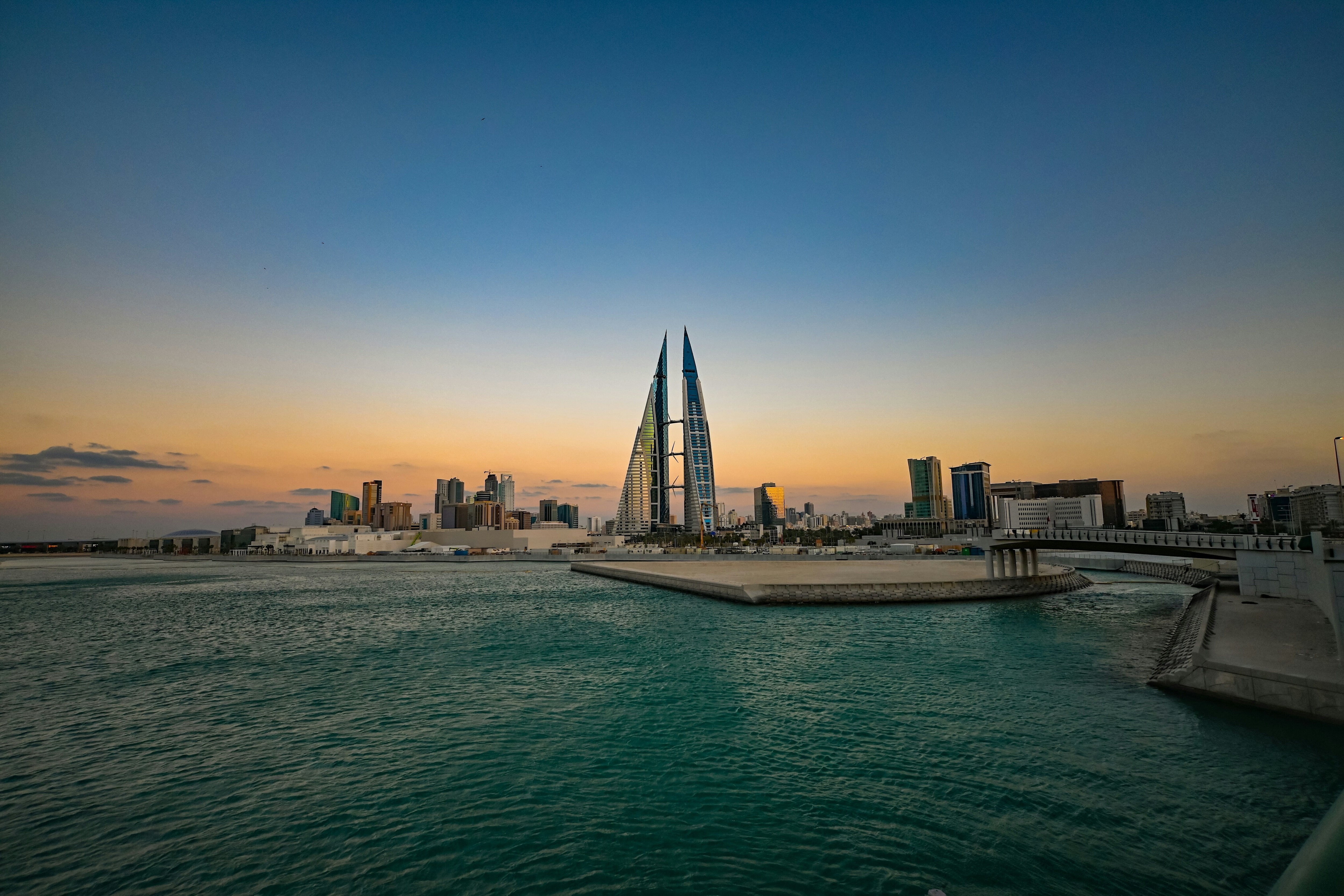
Bahrain leads on regulatory first-mover advantage, AWS region, and fintech-AI convergence. The smallest GCC economy with the most advanced regulatory architecture.
Executive Summary
Bahrain occupies a singular niche in the Gulf's AI landscape: the smallest GCC economy with the most advanced regulatory architecture. Where Qatar builds infrastructure, the UAE trains frontier models, Saudi Arabia deploys capital at massive scale, and Kuwait channels wealth through global vehicles, Bahrain has bet on a different theory of the case—that regulatory first-mover advantage, a cloud-friendly business environment, and fintech ecosystem depth can compensate for the capital and energy constraints that come with being the Gulf's most modest petro-state.
The evidence for this thesis is real. Bahrain was the first country in the Middle East to host a hyperscale cloud region when AWS launched its data center in 2019. The kingdom was among the world's first nations to implement AI procurement guidelines developed with the World Economic Forum. It launched a National Policy for Artificial Intelligence in July 2025 alongside the GCC's ethical AI manual. And financial services—not oil—became Bahrain's largest GDP contributor in 2022, powered in part by the regulatory sandbox and fintech infrastructure that now positions the kingdom as the Gulf's most credible test bed for AI-enabled financial innovation.
But Bahrain's limitations are structural. Mumtalakat, the sovereign wealth fund, holds roughly $17.6 billion in assets—less than 2% of what KIA, QIA, or PIF manage. The country has only three existing data center facilities and no frontier AI ambitions. It cannot compete on compute scale or sovereign model development. Instead, Bahrain plays a role that no other Gulf state has claimed: the regulation-first, sandbox-driven, talent-focused gateway where AI applications are tested, refined, and scaled before deployment across the broader GCC market. Whether this niche is sustainable as larger neighbors absorb Bahrain's regulatory innovations is the central strategic question.
I. The Institutional Architecture
Bahrain's AI governance is more integrated than Kuwait's and more regulation-forward than Qatar's, built on a foundation of e-government investments that predate the current AI wave by more than a decade.
The Information & eGovernment Authority (iGA)
The iGA serves as the central coordinating body for Bahrain's AI ecosystem. It established the kingdom's first Innovation and Advanced Technologies Directorate—a dedicated AI and emerging technologies unit that develops national policies and supports government entities in adopting AI across projects and services. The iGA issued the National Policy for the Use of Artificial Intelligence in July 2025, adopted the GCC's Guiding Manual on AI Ethics, and completed UNESCO's AI Readiness Assessment, which evaluated Bahrain across six pillars: governance, legislation, society, research, economics, and technological infrastructure. The iGA has also implemented practical AI applications including satellite and drone-based monitoring of building violations, a GIS-based Botanical Atlas using AI for agricultural planning, and AI-powered palm tree monitoring across the kingdom's entire territory.
National Digital Economy Strategy
AI sits within Bahrain's broader National Digital Economy Strategy (NDES), which was developed as an enabling pillar of Economic Vision 2030 and the forthcoming Economic Vision 2050. By October 2025, the government had completed six major NDES initiatives: establishing the Innovation and Advanced Technologies Directorate; expanding STEM scholarships (which accounted for over 84% of total scholarships in 2023/24); aligning the NDES with the National Cybersecurity Strategy; and launching cross-government digital integration programs. Parliament has debated a formal National AI Strategy proposal that would establish a dedicated AI Centre, draw investment, and build Bahraini expertise—with backing from the Economic Development Board, the Ministry of Finance, and the Nasser Centre for Science and Technology.
Regulatory Leadership: The AI Regulation Law
Bahrain's most distinctive institutional asset is its regulatory architecture. The kingdom proposed a draft Artificial Intelligence Regulation Law in April 2024 that would establish an AI governance unit, licensing requirements for AI systems, liability rules, and penalties for misuse—making it one of the first such comprehensive frameworks in the region. The Shura Council has approved a version of this legislation, and parliament is set to review the formal version in the coming months. The Wilson Center has assessed that Bahrain is well-positioned for the AI race, noting that its combination of fintech depth, national security infrastructure, and workforce development gives the kingdom real leverage despite its small size. Regional analysts describe Bahrain's approach as "soft regulation"—strategies, principles, and initiatives rather than binding laws—but the kingdom is moving faster than its GCC peers toward codified AI governance.
Mumtalakat: The Sovereign Wealth Fund
Mumtalakat, established by royal decree in 2006, manages roughly $17.6 billion in assets across more than 60 companies in 13 countries. It does not invest in oil or gas. In 2024, Mumtalakat posted its largest profit in history—BD 363 million ($963 million)—driven by the restructuring of McLaren Group. Its AI-adjacent moves include a strategic partnership with SandboxAQ in October 2025 to catalyze Bahrain's biotech ecosystem and the March 2024 launch of ARRAY, a digital solutions provider that created 1,000 jobs. The fund also signed a joint investment agreement with Saudi Arabia's PIF-backed SBIC in December 2025 to expand bilateral investment in strategic sectors. Mumtalakat's chairman has emphasized that the most compelling investment opportunities increasingly lie at home or in the region—a posture that contrasts with KIA's outward capital deployment but reflects Bahrain's more limited scale.
II. The U.S. Technology Stack
Bahrain's U.S. technology partnerships are anchored by AWS's regional cloud presence—a first-mover advantage that none of its Gulf competitors can replicate—supplemented by growing Microsoft engagement.
AWS: The Foundational Cloud Partner
Amazon Web Services launched its Middle East cloud region in Bahrain in 2019, making Bahrain the first country in MENA to host a hyperscale cloud region. This was not accidental—it followed Bahrain's adoption of a Cloud-First Policy and modern data regulations that made the kingdom the most cloud-friendly jurisdiction in the Gulf. The AWS region continues to serve regional demand and provides Bahrain with a structural advantage: enterprises across the Gulf that need compliant, low-latency cloud infrastructure have been routing through Bahrain for six years. The Bahrain Institute of Banking and Finance (BIBF) runs an AWS Machine Learning Programme with Tamkeen that trains Bahrainis specifically on ML methods, AWS services, and AI model deployment—tying the cloud infrastructure to a domestic talent pipeline that most Gulf states lack.
Beyon's Data Oasis: Domestic Infrastructure
The most significant recent infrastructure development is the commissioning of Bahrain's first White Space Data Centre by Batelco (a subsidiary of Beyon, in which Mumtalakat holds a stake), announced at Gateway Gulf 2025. The facility spans 6,000 square meters within Beyon's Data Oasis—a 140,000-square-meter campus in southern Bahrain. Built to international standards with redundant power and cooling, the data center is engineered for AI workloads, cloud service providers, and hyperscalers. It integrates clean power from Beyon's Solar Park, making it one of the most power-efficient facilities in the region. In January 2026, Batelco signed a partnership with Qareeb Data Centers to operate what they describe as Bahrain's first edge data center from the White Space facility—delivering sovereign, low-latency, AI-ready colocation services.
Beyon has committed over $250 million to digital infrastructure investment to boost Bahrain's digital economy. The Data Oasis concept mirrors the broader Bahraini strategy: build scalable, regulation-compliant infrastructure that attracts regional and international tenants who want sovereignty guarantees without the political complexity of larger Gulf markets.
Tencent Cloud: The Chinese Entry Point
Bahrain's most notable Chinese technology engagement runs through Tencent Cloud rather than Huawei. In December 2023, Batelco partnered with Tencent Cloud to host content delivery network services within its Bahrain network, and Tencent has signaled plans to establish a dedicated cloud and data center region in the country—which would make it the second cloud operator with a local region after AWS. This is a distinctive pattern: where Qatar's Chinese engagement runs through Huawei Cloud and Kuwait's through Zain's telecom partnership, Bahrain's takes the form of a Chinese consumer technology giant seeking a regulated Gulf entry point. The compliance implications are different—Tencent Cloud hosting CDN services is less geopolitically charged than Huawei deploying on-premises AI infrastructure—but the strategic logic is similar: Chinese firms want regulated Gulf jurisdictions to establish presence.
III. The Fintech-AI Nexus: Bahrain's Distinctive Asset
No other Gulf state has built the fintech-AI convergence that Bahrain has achieved. Financial services overtook oil as Bahrain's largest GDP contributor in 2022, accounting for approximately 17% of output. This transformation was deliberate—built on regulatory infrastructure that began with the region's first fintech regulatory sandbox in June 2017 and an open-banking rulebook issued by the Central Bank of Bahrain in December 2018.
The fintech ecosystem now comprises over 120 entities including digital banks, mobile payment providers, crowdfunding platforms, and open banking service providers—a 100% increase since 2018. The Central Bank of Bahrain operates FinHub 973, described as the region's first cross-border digital innovation platform, which connects fintechs with financial institutions for testing and prototyping under central bank supervision. Banks and fintechs are already piloting AI for fraud detection, credit scoring, robo-advisory, and chatbots—including Bank ABC's "Fatema" assistant and ASB Finance's "Baitak Assistant."
This fintech depth gives Bahrain something its wealthier neighbors lack: an operational AI deployment layer in a sector where data is abundant, use cases are proven, and regulatory guardrails already exist. As Binance founder CZ observed, Bahrain "doesn't get the international recognition it deserves" as one of the leading regulatory bodies in the space. The kingdom's US-Bahrain Free Trade Agreement—effective since January 2006—and bilateral investment treaty further lower barriers for American fintech and AI firms seeking a regulated Gulf entry point.
IV. The Talent Pipeline
Bahrain has invested more deliberately in AI workforce development than any other Gulf state relative to its size. In April 2025, Tamkeen announced a package to train 50,000 Bahrainis in AI by 2030—a massive number for a country of 1.5 million people. The Tamkeen-backed ecosystem includes the BIBF's Data Science and AI Academy, which offers bachelor's and master's tracks alongside the AWS Machine Learning Programme; Reboot01, a coding institute that produces full-stack developers specializing in AI, cybersecurity, and fintech, with 400 students enrolled and 34% women; and the MENA Innovation Academy launched with Bahrain FinTech Bay, featuring AI-in-FinTech courses led by visiting UC Berkeley faculty.
STEM scholarships accounted for over 84% of Bahrain's total scholarship allocation in the 2023/24 academic year—the highest concentration in the GCC. Bahrain Polytechnic operates an AI Academy in partnership with Microsoft. The kingdom achieved the first nationwide 5G coverage in MENA and maintains 100% internet penetration, ensuring that training programs can be delivered at scale across the population. The combination of regulatory depth, operational fintech deployment, and concentrated workforce investment creates a talent feedback loop that larger Gulf states—with bigger ambitions but more dispersed efforts—have not replicated.
V. Navigating the Export Control Landscape
Bahrain's export control position is the cleanest in the GCC. The kingdom has no meaningful Chinese cloud or AI compute infrastructure. Its Tencent Cloud engagement is limited to CDN services. Huawei provides telecom equipment but has no sovereign AI deployment comparable to its presence in Qatar or even the Zain partnership in Kuwait. Bahrain's primary cloud infrastructure runs through AWS—an American hyperscaler—supplemented by Beyon's domestically owned data center ecosystem.
The $17 billion in US-Bahrain investment agreements signed in July 2025, including a $2 billion Mumtalakat deal for aluminium-related downstream industries and direct flights between Bahrain and New York, reinforce a bilateral relationship anchored by the 2006 Free Trade Agreement. This commercial alignment, combined with the absence of dual-stack compliance complications, means Bahrain faces virtually none of the chip access or technology transfer tensions that constrain Qatar's hedging strategy or worry Washington about UAE and Saudi deployments. The trade-off is scale: Bahrain's clean compliance posture comes precisely because it has not accumulated significant advanced compute infrastructure that would trigger regulatory attention.
VI. Comparative Positioning
| Dimension | Saudi Arabia | UAE | Qatar | Kuwait | Bahrain | Oman |
|---|---|---|---|---|---|---|
| National AI Vehicle | HUMAIN (PIF, full-stack, GW-scale) | G42 + MGX ($100B fund) + AIATC + MBZUAI | QIA + TASMU Smart Qatar | CAIT + KNDP | iGA + Tamkeen | MTCIT + Oman GPT |
| GPU Commitments | 600K+ NVIDIA + AMD JV (1 GW) | 5 GW Stargate UAE campus; 35K chips approved; GB300 GPUs | ~Moderate | ~Nascent | ~Nascent | ~Nascent |
| Hyperscaler Regions | AWS (2026), Google, Oracle ×2, Microsoft | Microsoft ($15.2B), AWS, Oracle, Google; Khazna 70% DC market | Google, Microsoft, AWS | Microsoft Azure pilot | AWS (2019) | Otech multi-vendor |
| Chinese Stack Depth | Deep: Huawei ×4, Alibaba, Tencent, China Mobile JV | Divested: G42 stripped Huawei/ByteDance; Lunate retains 42X stakes | Huawei core network | Limited | Limited | Deep: Huawei national cloud |
| Semiconductor Play | Alat ($100B), NSH, KACST 3,600m² cleanroom | GlobalFoundries (world #3, Mubadala); MGX in Altera chip design | None | None | None | GSME (Oman 1/2 chips), OSAT pipeline |
| Energy for Compute | Virtually unlimited; 50% renewables 2030 | Barakah nuclear 5.6 GW + 5 GW solar; surplus to 2035 | Abundant gas | Abundant but constrained grid | Limited | Green hydrogen + renewables |
| SWF (AUM) | $913B (PIF) | $1.7T+ Abu Dhabi (ADIA $1.18T, Mubadala $358B, ADQ $251B) | $510B (QIA) | $923B (KIA) | $18B (Mumtalakat) | $53B (OIA) |
| Export Control | Tier 2 (rescinded); 35K chips approved Nov 2025 | Tier 2 (rescinded); 35K chips approved Nov 2025; Regulated Tech Env. | Tier 2 (rescinded) | Tier 2 (rescinded) | Tier 2 (rescinded) | Tier 2 (rescinded) |
VII. Assessment and Strategic Outlook
What Bahrain Gets Right
Bahrain's approach carries structural advantages that its wealthier neighbors cannot easily replicate. The AWS first-mover advantage—six years of operational hyperscale cloud before most GCC states had any—created institutional knowledge, regulatory frameworks, and enterprise relationships that are sticky even as Microsoft and Google deploy competing regions across the Gulf. The fintech ecosystem is genuinely differentiated: over 120 entities operating under a central bank sandbox and open-banking rulebook, with AI already deployed in production across fraud detection, credit scoring, and customer-facing services. Financial services as the largest GDP contributor—overtaking oil in 2022—validates the economic diversification thesis that every Gulf state claims but few have achieved.
The regulatory posture is Bahrain's most defensible asset. Being among the world's first to implement WEF-developed AI procurement guidelines, proposing comprehensive AI legislation, and creating a dedicated AI governance unit within government gives Bahrain credibility with multinational firms that need regulatory clarity before deploying AI systems. The 50,000-person AI training target through Tamkeen—representing roughly 3% of the total population—is proportionally the most ambitious workforce development program in the GCC. And the kingdom's size, which limits its AI infrastructure ambitions, also allows faster policy iteration: Bahrain can test and refine AI governance frameworks at national scale before larger neighbors attempt the same.
Where the Risks Lie
The fundamental vulnerability is that Bahrain's advantages are replicable. Saudi Arabia and the UAE are building their own regulatory frameworks, fintech sandboxes, and workforce programs—with far greater resources. As those countries mature, Bahrain's role as the regulated gateway may shrink. The kingdom's data center capacity—three existing and two upcoming facilities—is dwarfed by what the UAE, Saudi Arabia, and even Qatar are deploying. Mumtalakat's $18 billion in assets cannot compete with QIA's $557 billion or KIA's trillion-dollar war chest for AI infrastructure investment.
Bahrain also faces fiscal constraints that its GCC peers do not. S&P revised its outlook on Mumtalakat to negative in early 2025 after downgrading Bahrain's own outlook due to persistent fiscal deficits. The country's non-oil economy is growing, but government debt remains high relative to the region. Sustained AI investment—in infrastructure, workforce, and regulatory capacity—requires fiscal space that Bahrain must carefully manage. The $17 billion in U.S. investment agreements and the PIF-SBIC-Mumtalakat partnership with Saudi Arabia help, but Bahrain's AI trajectory remains more capital-constrained than any other Gulf state pursuing serious technology ambitions.
The Bottom Line
Bahrain's AI ecosystem is best understood not as a competitor to the UAE, Saudi Arabia, or Qatar but as a complement. The kingdom occupies the regulatory-sandbox-and-talent tier of the GCC's emerging AI division of labor. It provides the governed test bed where AI applications—especially in financial services—are validated before scaling across larger Gulf markets. Its AWS cloud region, fintech ecosystem depth, and regulatory maturity create a moat that is narrow but real.
For external stakeholders, Bahrain is the place to test AI in a regulated Gulf environment, not the place to deploy AI at scale. Firms that need a regulatory sandbox, a compliant cloud region, a trained local workforce, and proximity to GCC markets will find Bahrain compelling. Firms that need massive compute, sovereign model development, or infrastructure-scale AI deployment will look to Abu Dhabi, Riyadh, or Doha. Bahrain's strategic challenge is to make this niche durable—to stay ahead on regulation, deepen the fintech-AI convergence, and ensure that its human capital investment translates into a technical workforce that cannot simply be poached by better-funded neighbors. The kingdom's size is both its constraint and its agility. Whether agility proves more valuable than scale in the AI race remains an open question.