← Back to Map

Qatar's AI Ecosystem
Doha skyline

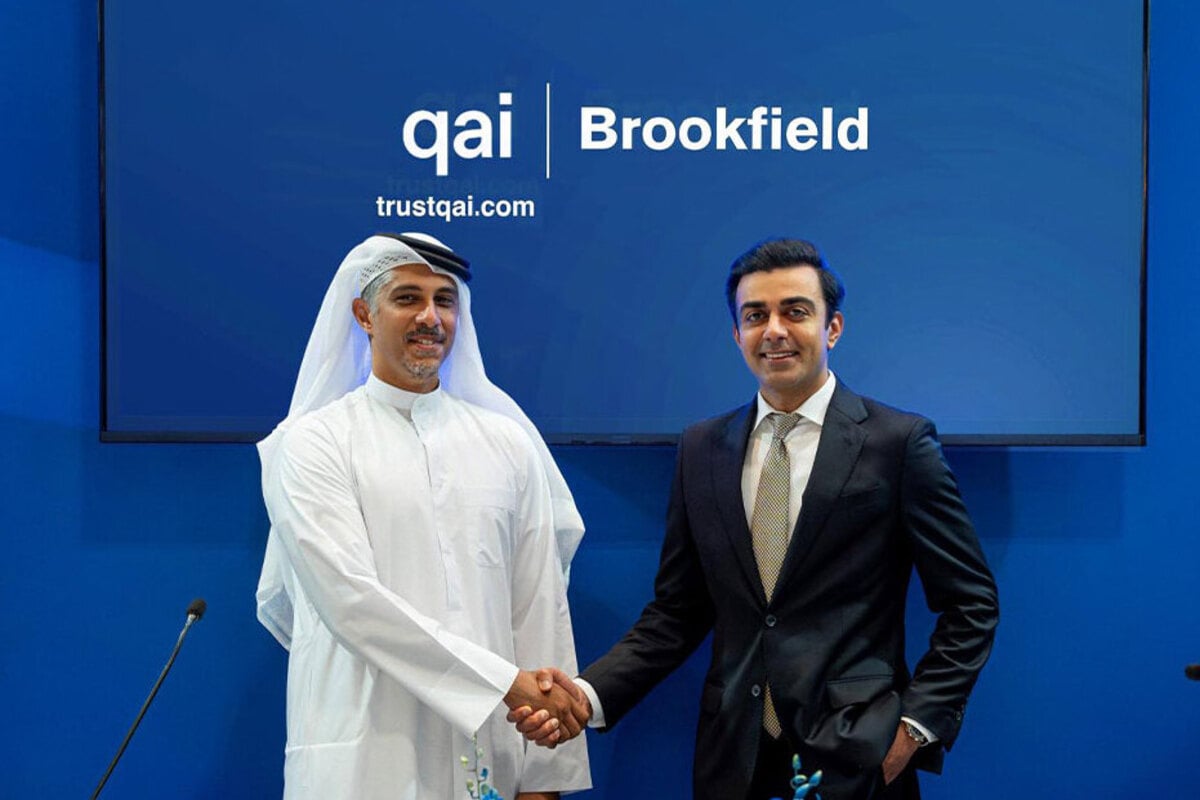
Qatar has emerged as the Gulf's most strategically calculated late mover in the AI race. While Abu Dhabi's G42 and Riyadh's Humain grabbed early headlines with frontier model ambitions, Doha has pursued a different theory: build the infrastructure layer, monetize the energy stack, and keep both Washington and Beijing close enough to extract maximum value. The December 2025 launch of Qai—a QIA subsidiary—paired with a $20 billion Brookfield joint venture for AI compute infrastructure, signals that Qatar has shifted to aggressive commercial execution.

This briefing maps the full landscape of Qatar's AI ecosystem as it stands in early 2026, tracing capital flows from the sovereign wealth fund through to chip-level partnerships, assessing how Doha navigates U.S. export controls and Chinese digital infrastructure simultaneously, and evaluating the strategic logic that ties Qatar's LNG expansion to its AI ambitions. The core finding: Qatar is not choosing between Washington and Beijing. It is constructing a sovereign AI corridor designed to extract technology and capital from both while maintaining enough regulatory alignment with the United States to keep advanced chip access open—a posture that is more pragmatic than the UAE's and less aggressive than Saudi Arabia's, but potentially more durable.

I. The Institutional Architecture

Qatar's AI ecosystem rests on a layered institutional structure that has matured considerably since the country launched its first National AI Strategy in 2019. At the apex sits the Qatar Investment Authority ($557 billion in assets under management), which now drives AI policy through capital allocation rather than traditional bureaucratic planning.

Qai: The National AI Company

Launched in December 2025 as a QIA subsidiary, Qai represents Qatar's most consequential institutional bet on artificial intelligence. Unlike the UAE's G42 or Saudi Arabia's Humain, Qai has explicitly stated it will not build its own large language models. Chairman Abdulla Al-Misnad described the strategy as focused on evaluating and commercializing existing models while preparing for capabilities expected to mature in one to three years—particularly autonomous agents. Rather than compete with OpenAI, Anthropic, or DeepSeek on frontier model development, Qai positions itself as infrastructure provider and trusted deployment partner.

The $20 billion Brookfield joint venture announced simultaneously will develop fully integrated AI facilities, including high-performance compute centers, with Brookfield investing through its AI Infrastructure Fund (which targets $100 billion globally). Qatar's geographic position between Europe, Asia, and Africa, combined with cheap natural gas feedstock, makes it a logical hub for hyperscale AI facilities. QIA's head of funds Mohsin Pirzada told Reuters the sovereign fund has been investing in data centers "since before it was in fashion," comparing the current AI investment boom to the 1990s dotcom era.

The Ministry of Communications and Information Technology (MCIT)

MCIT serves as the policy and coordination arm for AI deployment across government. Its GovAI Program, launched under the Digital Agenda 2030, has identified and prototyped over 50 real-world AI use cases across sectors from transport and healthcare to urban services—work conducted in partnership with U.S.-based Scale AI. In December 2025, MCIT signed a cooperation agreement with PwC Middle East and OpenAI to establish a national AI testbed for government entities and startups, deploy ChatGPT-based productivity tools across public-sector institutions, and design AI-driven projects in key national sectors.

QIA's Venture Portfolio

The sovereign wealth fund has been building a deliberate portfolio across the AI value chain. Key investments include: Databricks (the $43 billion AI/data analytics platform, with follow-on in January 2025); Elon Musk's xAI ($6 billion Series C, December 2024); d-Matrix ($275 million Series C for AI inference hardware, November 2025); Cresta (led $125 million round, November 2024); Positron (AI chip startup, $230 million Series B at Web Summit Qatar); Ardian Semiconductor fund (anchoring European semiconductor investment); and Alice & Bob (Paris-based quantum computing, co-led with Bpifrance). QIA has also announced plans to invest $500 billion in the United States over the next decade, targeting AI, data centers, and healthcare.

II. The U.S. Technology Stack

Qatar's most visible and capital-intensive AI partnerships run through the American technology ecosystem. The dominant pattern is infrastructure-first: Doha is purchasing compute capacity, cloud services, and deployment tools rather than frontier model IP.

Nvidia-Ooredoo: The Sovereign AI Cloud

The Nvidia partnership, running through Qatar's national telecom champion Ooredoo, constitutes the backbone of the country's sovereign compute infrastructure. In June 2024, Ooredoo became an Nvidia Cloud Partner, gaining access to Nvidia's Tensor Core GPUs for deployment across data centers in Qatar, Kuwait, Oman, Tunisia, Algeria, and the Maldives. This marked Nvidia's first major AI deployment in the MENA region. By July 2025, Ooredoo launched sovereign AI cloud services built on Nvidia's latest Hopper GPUs, hosted entirely in local data centers. The platform operates under Qatar's national data policies, keeping critical business data within borders. Ooredoo has committed $1 billion to expand data center capacity from 40 MW to 120 MW by decade's end, with operations spun out into a dedicated entity called Syntys following an investment from Iron Mountain.

Ooredoo's CEO has explicitly emphasized compliance with all U.S. regulations on Nvidia chip procurement. This compliance posture is central to Qatar's strategy. Under Biden's January 2025 AI Diffusion Rule, Qatar fell into Tier 2, facing caps of roughly 50,000 H100-equivalent GPUs between 2025 and 2027. The Trump administration rescinded this framework in May 2025 during the president's Gulf tour. Qatar's $200 billion in pledged investments during the Trump visit—including a major Boeing order for Qatar Airways—appears designed in part to secure more favorable chip access terms.

Microsoft Azure and OpenAI

Microsoft operates a data center region in Qatar and has become the cloud provider of choice for government AI deployment. In February 2025, MCIT signed a partnership with Microsoft to launch Azure OpenAI services, deploying advanced OpenAI models through local cloud infrastructure with new GPUs available in-country. Qatar's government e-service portal Hukoomi was among the first in the region to integrate OpenAI GPT capabilities through Azure. Microsoft projects it will generate $5.6 billion in economic value and 13,000 jobs in Qatar by 2030. Visit Qatar has deployed a GenAI Travel Concierge powered by Azure and OpenAI 4o.

Scale AI

The February 2025 deal with Scale AI—which provides training data to OpenAI, Google, Microsoft, and Meta—is arguably the most strategic of Qatar's U.S. partnerships. Scale AI is developing AI voice, chat, and email agents for government contact centers; automated construction permits; AI agents for contract drafting, legal guidance, and licensing; and tools for education, healthcare, and transportation. This goes well beyond procurement—it embeds U.S. AI tools into the operating system of the Qatari state.

III. The Chinese Technology Stack

While Qatar's headline deals skew American, China's technological footprint in the country runs deeper than most Western analysts recognize—and it operates through different channels than in Saudi Arabia or the UAE.

Huawei Cloud and MEEZA

Huawei has operated in Qatar for over 20 years and has significantly escalated its AI engagement. The company's cloud division works through a strategic partnership with MEEZA, Qatar's leading managed IT services provider, to deliver on-premises Huawei Cloud Stack solutions for government and enterprises. At MWC Doha 2025, MEEZA and Huawei signed two MOUs to deepen collaboration in private digital infrastructure, AI services, and a National Training Program.

Critically, Huawei Cloud offers DeepSeek, Huawei Pangu, and various open-source LLMs in Qatar, all managed and operated locally in line with Qatar's sovereignty requirements. Huawei also partnered with Media City Qatar at Web Summit Qatar 2025 to build a smart media campus with AI-powered infrastructure, and launched the QDA & Huawei ICT Academy with Qatar Digital Academy to train Qatari professionals in 5G, cloud computing, and digital transformation.

Zhongguancun and QSTP

The academic and research track of China-Qatar AI cooperation runs through the Qatar Science & Technology Park (QSTP). In April 2024, Beijing's Zhongguancun—China's premier technology park—met with QSTP leadership to discuss collaboration in AI and smart manufacturing. The Qatar Computing Research Institute and Huawei jointly developed the SIHA health analytics platform in 2023, integrating data from Huawei wearables for personalized healthcare.

The Data Dependency Question

The analytical question with China's AI presence in Qatar is whether it constitutes partnership or dependency. An assessment from The Diplomat frames the stakes: Chinese companies in the Gulf generate a "reverse data dependency" where Gulf states use Chinese technology but the algorithms are fed by local data, effectively enhancing Chinese algorithmic power through access to diverse datasets. The 2025 agreement between the Qatari government, Huawei, and Cloud for cloud systems and data infrastructure is described as part of China's Digital Belt and Road Initiative. Qatar's approach—investing heavily in education, technological diplomacy, and academic cooperation with China—differs from the UAE's deeper commercial integration through G42.

IV. The Petro-Compute Thesis

Qatar's most distinctive strategic asset in the AI race is not capital alone—it is the marriage of capital to energy. QatarEnergy CEO Saad Sherida Al-Kaabi has made the link explicit, telling Reuters that AI and data center power demand will transform a projected LNG oversupply into a shortage by 2030. Speaking at LNG2026 in Doha in February 2026, Al-Kaabi projected LNG demand rising from approximately 400 million tons today to 600–700 million tons, driven in significant part by AI infrastructure.

The logic is self-reinforcing. Qatar's $28.75 billion North Field East expansion and $10 billion North Field South project will boost production capacity to 126 million tons per year by 2027—accounting for roughly 40% of global LNG supply. AI data centers need enormous, stable, baseload power that renewables alone cannot provide. Qatar produces the gas, sells it to power AI infrastructure globally, and simultaneously builds AI compute at home where energy is cheapest. This is the "petro-compute" thesis in its purest form—more elegant than Saudi Arabia's approach because Qatar controls a greater share of the global LNG market and can more directly capture the energy-AI nexus.

V. Navigating the Export Control Landscape

Qatar occupies a peculiar position in the U.S. chip export regime. Under Biden's January 2025 AI Diffusion Rule, Qatar fell into Tier 2 alongside Saudi Arabia and the UAE—subject to caps on advanced chip imports but eligible for expanded access through Validated End-User arrangements. The Trump administration rescinded this framework in May 2025, two days before its enforcement deadline, and replaced it with bilateral deal-making during the president's Gulf tour.

Qatar's strategy for navigating these constraints has three visible elements. First, regulatory alignment: Qatari officials have publicly emphasized compliance with both U.S. and EU frameworks. Second, platform diversification: by maintaining parallel partnerships with both Nvidia/Microsoft (U.S. stack) and Huawei Cloud/MEEZA (Chinese stack), Qatar hedges against disruption from either side's export controls. Third, the Brookfield channel: the $20 billion Qai-Brookfield JV routes capital through a Canadian-headquartered global infrastructure manager, potentially offering a cleaner regulatory pathway for compute deployment than direct sovereign-to-sovereign chip deals.

The Trump administration's BIS guidance from May 2025—while rescinding the diffusion rule—specifically warned that providing access to advanced semiconductors when the provider knows they may be used to train AI models by Chinese-headquartered entities remains a potential violation. This creates a compliance tension for Qatar, which hosts both U.S. and Chinese cloud infrastructure. How Doha manages the coexistence of Nvidia Hopper GPUs in Ooredoo data centers and Huawei Cloud's on-premises AI solutions in MEEZA facilities—on the same small peninsula—will be one of the most closely watched compliance questions in the region. Carnegie's analysis of the Gulf chip deals argues that a top U.S. priority should be restricting Gulf investments in China's AI and semiconductor sectors—a condition that would directly constrain QIA's hedging strategy.

VI. Comparative Positioning

Dimension Saudi Arabia UAE Qatar Kuwait Bahrain Oman
National AI VehicleHUMAIN (PIF, full-stack, GW-scale)G42 + MGX ($100B fund) + AIATC + MBZUAIQIA + TASMU Smart QatarCAIT + KNDPiGA + TamkeenMTCIT + Oman GPT
GPU Commitments600K+ NVIDIA + AMD JV (1 GW)5 GW Stargate UAE campus; 35K chips approved; GB300 GPUs~Moderate~Nascent~Nascent~Nascent
Hyperscaler RegionsAWS (2026), Google, Oracle ×2, MicrosoftMicrosoft ($15.2B), AWS, Oracle, Google; Khazna 70% DC marketGoogle, Microsoft, AWSMicrosoft Azure pilotAWS (2019)Otech multi-vendor
Chinese Stack DepthDeep: Huawei ×4, Alibaba, Tencent, China Mobile JVDivested: G42 stripped Huawei/ByteDance; Lunate retains 42X stakesHuawei core networkLimitedLimitedDeep: Huawei national cloud
Semiconductor PlayAlat ($100B), NSH, KACST 3,600m² cleanroomGlobalFoundries (world #3, Mubadala); MGX in Altera chip designNoneNoneNoneGSME (Oman 1/2 chips), OSAT pipeline
Energy for ComputeVirtually unlimited; 50% renewables 2030Barakah nuclear 5.6 GW + 5 GW solar; surplus to 2035Abundant gasAbundant but constrained gridLimitedGreen hydrogen + renewables
SWF (AUM)$913B (PIF)$1.7T+ Abu Dhabi (ADIA $1.18T, Mubadala $358B, ADQ $251B)$510B (QIA)$923B (KIA)$18B (Mumtalakat)$53B (OIA)
Export ControlTier 2 (rescinded); 35K chips approved Nov 2025Tier 2 (rescinded); 35K chips approved Nov 2025; Regulated Tech Env.Tier 2 (rescinded)Tier 2 (rescinded)Tier 2 (rescinded)Tier 2 (rescinded)

The critical distinction: Qatar has opted for infrastructure arbitrage over model sovereignty. Where Abu Dhabi wants to train its own frontier models and Riyadh wants to host massive compute clusters, Doha wants to own the physical and energy layer beneath both. This is a less glamorous but potentially more defensible position—data centers and LNG contracts generate stable cash flows regardless of which AI model architecture ultimately dominates.

VII. Assessment and Strategic Outlook

What Qatar Gets Right

Qatar's approach carries several structural advantages. The petro-compute loop is genuinely self-reinforcing: as the world's largest LNG exporter (with capacity expanding dramatically), Qatar profits from AI's energy appetite regardless of which technology stack prevails. The decision not to build frontier models avoids the most capital-intensive and technically risky dimension of AI competition—and avoids the regulatory scrutiny that frontier model development attracts from Washington. QIA's venture portfolio is well-constructed across the AI value chain, from inference hardware (d-Matrix) to data platforms (Databricks) to semiconductor funds (Ardian), creating optionality without overcommitment to any single technology.

Where the Risks Lie

The dual-stack approach—Nvidia and Microsoft alongside Huawei Cloud—creates a compliance tightrope that will only narrow as U.S.-China technology competition intensifies. BIS guidance explicitly flags the risk of advanced chips being used to benefit Chinese-headquartered AI development, and Qatar's small geography makes the coexistence of U.S. and Chinese infrastructure particularly visible. If Washington moves toward stricter end-use enforcement, Qatar will face harder choices about which technology stack to prioritize for sensitive applications.

Qatar also faces a human capital constraint. Despite progress through programs like the QDA-Huawei ICT Academy and HBKU's quantum computing center, the country lacks the deep technical workforce that the UAE has cultivated through institutions like the Technology Innovation Institute. The talent pipeline remains the binding constraint on translating infrastructure investment into domestic AI capability.

The Bottom Line

Qatar is not "orienting" toward either the U.S. or China. It is constructing a sovereign corridor designed to extract value from both while maintaining maximum strategic flexibility. The weight of capital and institutional commitment tilts decisively toward the U.S. technology stack (the Nvidia sovereign cloud, Azure OpenAI, Scale AI integration, Brookfield JV, and QIA's massive planned U.S. investment all point West). But the Chinese layer—Huawei Cloud, MEEZA, Zhongguancun research ties—persists as a deliberate hedge and a source of technology that operates outside U.S. export control constraints.

For Doha, the endgame is not to become an AI superpower. It is to become the indispensable physical infrastructure node in the global AI economy—the place where energy meets compute, where both American and Chinese clouds can operate under sovereign oversight, and where the returns flow back through the world's most concentrated sovereign wealth structure. Whether this hedged position remains viable as technology bifurcation accelerates is the central strategic question for Qatar's AI future.